Broward County Auditor Records provide structured information on how public funds are reviewed, verified, and reported across county departments. The Broward County Auditor handles financial audits that support accuracy in government spending and reporting. These records help show how taxpayer money is managed across different county operations and departments.
The Broward County Auditor plays a central role in financial oversight by examining budgets, tracking expenditures, and checking compliance with financial rules. These audit records strengthen financial transparency, improve accountability, and help maintain clear government audit reporting for public review. They also support consistent monitoring of financial activity to reduce errors and improve reporting reliability across county systems.
What Does the Broward County Auditor Do?
The Broward County Auditor reviews financial activity within county departments. The office checks records to confirm that public money is used properly.
Role of the Broward County Auditor
The Broward County auditor works as a financial oversight function for county operations. This office focuses on audit reports, budget activity, and spending records across public departments.
Main responsibilities include:
- Reviewing county spending records
- Checking the accuracy of financial statements
- Testing internal controls in departments
- Reporting findings from government audits
The role supports accountability in public finance. It also helps detect errors, weak controls, or irregular spending patterns before they grow into larger issues.
Internal Audits and External Audits
The auditor reviews two main audit types: internal audits and external audits. Each type serves a different purpose in compliance review and financial monitoring.
Internal audits:
- Conducted within county systems
- Focus on daily financial processes
- Review department-level controls
- Identify process gaps early
External audits:
- Performed with outside audit firms or state review teams
- Focus on independent verification
- Check the final financial statements
- Confirm alignment with public reporting standards
Both audit types support financial transparency and help maintain consistent reporting practices across Broward County departments.
Broward County Financial Records
Broward County financial records show how public money is collected, planned, and spent across county departments. These records help explain budget records, financial transparency, and public funds tracking in a structured way. They include details on income sources, yearly budgets, and spending categories. The information helps residents and researchers see how county operations are funded and managed.
Budget Structure in Broward County Financial Records
The budget structure in Broward County’s financial records follows a planned system that divides money into clear categories. Each fiscal year, county departments submit budget requests based on service needs. These requests are reviewed and adjusted before approval.
The structure usually separates funds into:
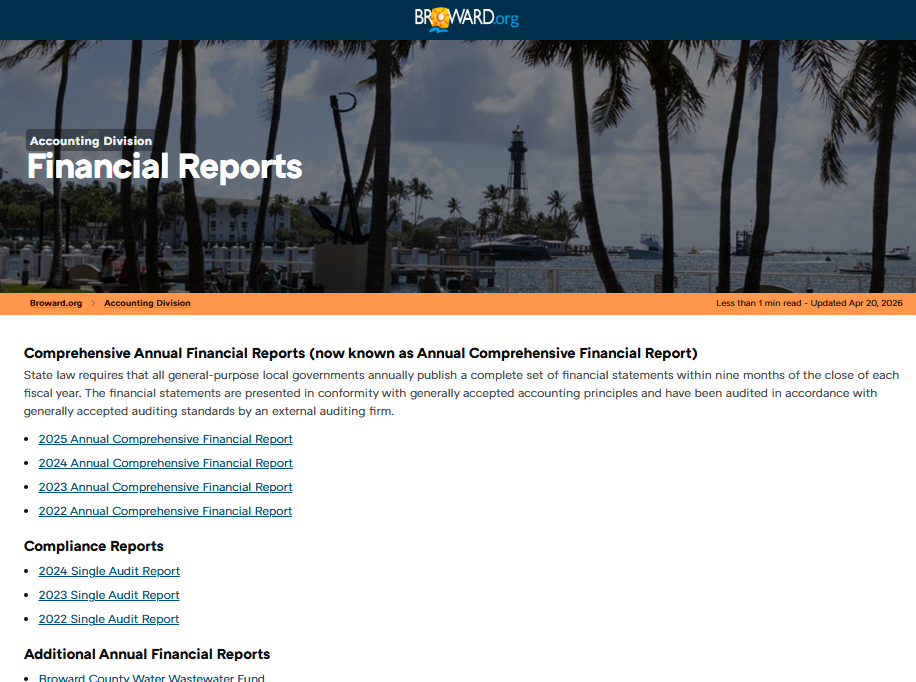
- https://www.broward.org/Accounting/Pages/Reports.aspx
- General Fund for daily operations, like administration and public safety
- Special Revenue Funds for specific programs, such as transportation or housing
- Capital Projects Fund for long-term infrastructure work
- Debt Service Fund for loan and bond payments
This system helps track how funds move across departments. It also supports financial transparency by showing where money is allocated.
Revenue Sources and Spending Breakdown
Broward County financial records rely on several revenue streams that fund county services. These income sources support public services, infrastructure, and administrative functions.
Main revenue sources include:
- Property taxes are collected from real estate owners
- State and federal grants for public programs
- Service fees such as permits, licenses, and fines
- Sales tax distribution from the state
The spending breakdown shows how funds are used across departments. A large portion goes to public safety, including law enforcement and emergency services. Other funds support transportation, health programs, and community development.
Audit Reports and Public Accountability
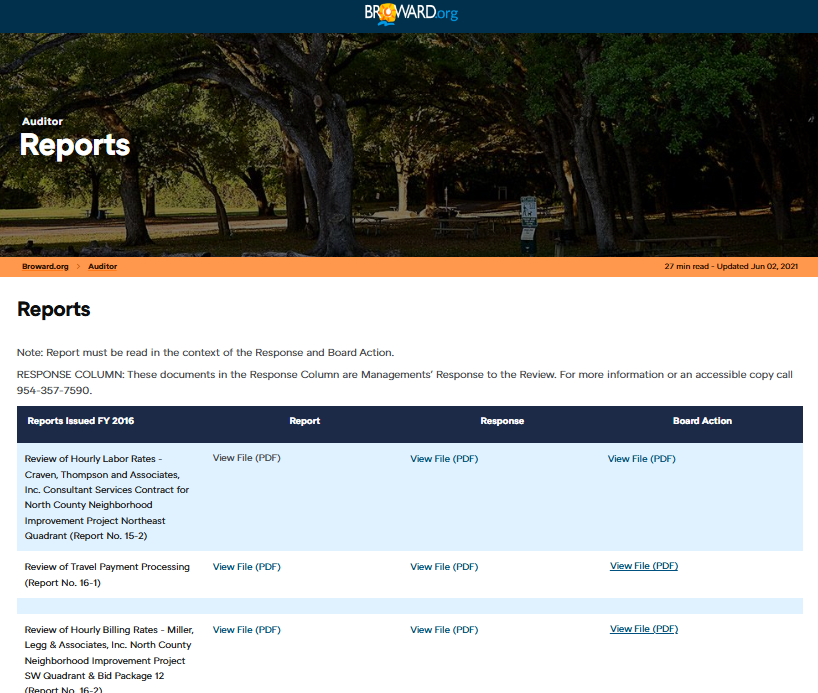
Audit reports from Broward County Auditor Records provide formal reviews of public spending, financial activity, and compliance across county departments. These reports support public accountability https://www.broward.org/AUDITOR/Pages/reports.aspx by showing how funds are managed and whether rules are followed. They include detailed findings from government audits, financial oversight reviews, and accountability reports that help track performance across public offices.
Annual Audit Reports
Annual audit reports summarize the county’s financial condition for each fiscal year. They review revenue, expenses, assets, and liabilities across departments. These reports are prepared using standard auditing practices and are often reviewed by independent auditors. They help highlight whether public funds match approved budgets.
Elements in annual audit reports include:
- Year-end financial statements
- Budget comparison results
- Revenue collection records
- Expense tracking across departments
- Notes on financial discrepancies
These reports also show long-term spending patterns. Public officials and residents use them to review how taxpayer money moves through county systems.
Special Financial Audits
Special financial audits focus on specific departments, programs, or transactions instead of the full county budget. These audits often respond to concerns, irregular activity, or targeted reviews. They provide a deeper examination of financial records and internal processes.
Typical areas reviewed in special audits include:
- Grant fund usage
- Procurement and contract spending
- Department-specific expenditures
- Payroll accuracy
- Capital project costs
These audits help detect errors, mismanagement, or policy gaps. Findings from special financial audits often lead to corrective steps within county offices.
Compliance Reporting and Accountability Reporting
Compliance reporting focuses on whether county operations follow state laws, federal rules, and internal policies. It works alongside financial oversight to maintain transparency in public operations. Accountability reports combine audit findings, compliance results, and financial data into structured summaries for public review.
Elements often included:
- Rule compliance checks
- Policy adherence reports
- Internal control assessments
- Risk evaluation summaries
- Audit response actions
| Report Type | Focus Area | Purpose |
|---|---|---|
| Annual Audit Reports | Full county finances | Yearly financial review |
| Special Financial Audits | Specific programs or funds | Targeted investigation |
| Compliance Reports | Rules and policies | Legal and procedural review |
| Accountability Reports | Combined findings | Public transparency summary |
These reporting systems support government audits that track how departments handle public funds. They also help identify gaps in procedures that may affect financial oversight.
Financial Transparency in Broward County Auditor Records
Broward County’s financial transparency focuses on public visibility of county spending, audits, and fiscal records through structured reporting systems. This system supports accountability by making financial data available through open government data platforms and official audit reporting channels.
Open Data Systems in Broward County Auditor Records
Open data systems in Broward County organize financial and audit information in a structured format for public viewing. These systems support financial transparency by publishing budgets, expenditure reports, vendor payments, and audit summaries. The county uses digital reporting tools that store fiscal records in searchable formats. This supports public accountability by allowing residents, researchers, and oversight groups to review how funds move through departments.
Record types within open data systems include:
- Annual budget statements and revisions
- County expenditure and procurement logs
- Audit findings and compliance reports
- Revenue tracking and tax distribution data
- Department-level financial summaries
These records support open government data practices by making financial activity more traceable across departments. It also reduces gaps in reporting and strengthens public confidence in fiscal management.
Transparency Laws and Public Accountability
Broward County financial reporting follows state and federal transparency requirements that shape how records are created and published. These laws support structured reporting of public funds and audit activity across all county departments. The Florida public records law plays a central role in financial reporting rules. It requires government entities to document financial transactions and maintain organized audit trails for review.
Elements of transparency compliance include:
- Regular financial audits by internal and external auditors
- Publication of budget execution reports
- Documentation of contract spending and vendor payments
- Reporting of revenue sources such as taxes and fees
- Standardized fiscal reporting formats across departments
These systems support public accountability by reducing uncertainty in government spending patterns. They also create a consistent record trail that supports oversight activities and policy evaluation.
How to Access Broward Audit Records
Broward audit records are separate from arrest records, which are maintained in different county databases and law enforcement systems. These documents are organized for public review through structured record search platforms and archived reporting systems. Users typically find these records through online repositories maintained by county departments, where audit files are categorized by year, department, and report type.
Where Broward Audit Reports Are Stored
Audit reports are kept across multiple official storage points, depending on the department that produced them. Most reports fall under structured audit archive systems that support transparency and historical tracking.
Locations include:
- County financial reporting sections
- Internal audit department archives
- Public records request portals
- Annual compliance report databases
These sources often categorize documents by fiscal year, department name, and audit category. For example, performance audits and financial compliance reports are stored separately for easier retrieval.
Online Portals for Record Search
Digital platforms play a central role in locating Broward audit materials. These systems support keyword-based record search functions that filter reports by department, date range, or document type.
Typical online systems include:
- County auditor web portals
- Government document repositories
- Financial transparency dashboards
- Archived report libraries
A simple table shows how records are organized:
| Record Type | Storage Location | Common Filter Options |
|---|---|---|
| Financial Audits | Audit Archive System | Year, department |
| Compliance Reports | Public Records Database | Report type, date range |
| Performance Reviews | Department Portals | Program name, fiscal year |
These systems allow structured retrieval through record search tools that scan indexed documents across departments.
Steps for Retrieving Audit Files
Audit documents can be located through a step-by-step process that focuses on official databases and search filters:
- Open the county records portal
- Enter keywords related to the audit topic or department
- Filter results by year or report classification
- Review available documents in the audit archive
- Select the relevant file for detailed review
This process supports efficient filtering across large public records databases, especially when multiple years of financial reports are involved.
FAQs About Broward County Auditor
The Broward County Auditor handles financial review work for county operations and supports public transparency through official reporting. This section answers common questions about audit duties, financial records, and public availability of reports. It helps readers understand how public records, financial audits, and transparency reports are managed within Broward County.
What does the county auditor do?
The county auditor examines how public money is spent across different departments. The office reviews budgets, checks payment records, and evaluates financial activity for accuracy and compliance with county and state rules. It also identifies errors, irregular spending patterns, and areas that need correction. This role supports accountability in government finance through structured review processes. Audit findings are shared with county leadership to improve financial control systems. The work also helps strengthen trust in how taxpayer funds are managed and reported.
Where are financial records published?
Financial records for Broward County are published through official government platforms that handle budgeting and reporting data. These records may include annual reports, departmental financial statements, and audit summaries prepared by county offices. Public record systems also hold many of these documents for public review. In many cases, residents can find reports through county finance pages or public records request systems. These sources are part of the county’s effort to maintain open financial reporting. They help ensure that spending details remain traceable and available for review.
Are audit reports public?
Most Broward County audit reports are treated as public documents and are released after completion and review. These reports are shared through official county channels so residents and oversight groups can review financial performance and compliance results. They often highlight findings related to spending accuracy and internal controls. Publicly available reports may include summaries, detailed audit findings, and transparency reports. These documents help show how county departments manage funds and follow financial rules. Access to this information supports accountability across local government operations.
How often are Broward County audits conducted?
Broward County audits are carried out on a regular schedule, depending on department needs and financial activity. Some reviews happen annually, while others take place quarterly or during specific project evaluations. The timing depends on risk levels and budget size within each department. These ongoing financial audits help detect issues early and maintain accurate reporting. Internal audit teams may also perform special reviews when concerns arise. This process supports steady monitoring of county spending and record accuracy.
Can residents request audit records directly?
Residents can request Broward County audit records through official public records request systems. These systems allow people to ask for specific financial documents, audit summaries, and related reports held by county offices. Requests are reviewed and processed according to public information rules. Once approved, documents may be shared electronically or through official copies. These materials often include public records, budget summaries, and transparency reports that show how funds are managed. This process supports open financial reporting across county departments.